
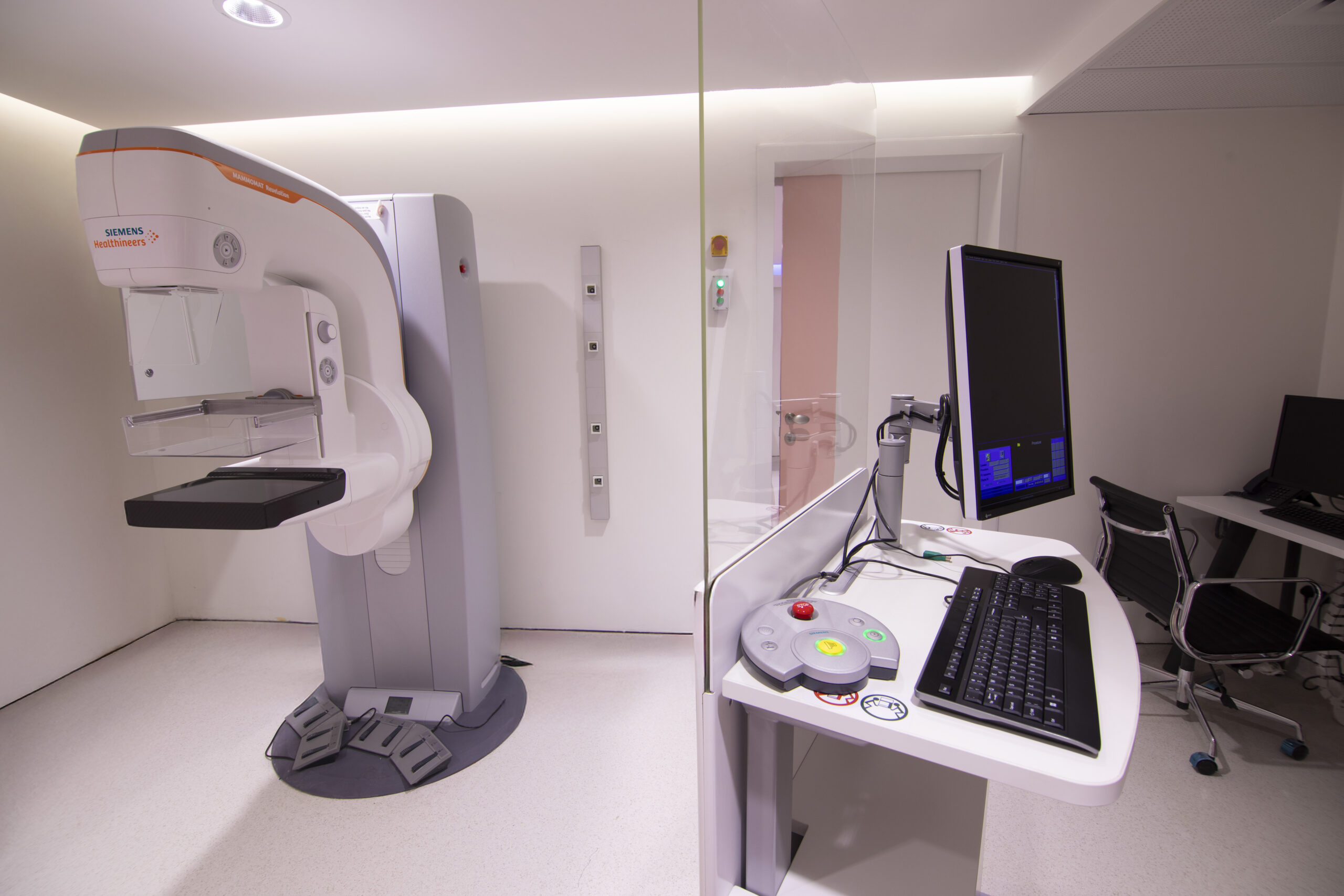
Specialized Medical Service for Mammography / 3D Breast Imaging (Tomosynthesis)
What is Mammography?
Mammography is an examination using a low dose of X-rays to image breast tissue. It is essential for:
- Early detection of breast cancer in women with no symptoms.
- Diagnosing breast diseases in women with symptoms such as lumps, pain, or nipple discharge.
Recent Developments:
Recent Advances:
- Full-Field Digital Mammography (FFDM):
- Replaces x-ray film with solid-state detectors, providing digital images for clearer analysis.
- Computer-Aided Detection (CAD):
- Scans mammograms for abnormal areas (e.g., density, masses, calcifications), highlighting them for radiologists.
- Breast Tomosynthesis (3-D Imaging):
- Produces layered images of the breast, enhancing cancer detection and reducing recalls for additional imaging.
Why is it performed?
- Screening Tools: to detect early-stage breast cancer in women with no symptoms.
- Diagnostic Tools: to evaluate breast symptoms, including lumps, pain, or nipple discharge.
Preparation Guidelines
- Timing:
- Avoid scheduling a mammogram the week before your period if breasts are tender.
- The optimal time is one week after your period.
- On Exam Day:
- Avoid deodorants, talcum powder, or lotion on your underarms or breasts, as these can affect imaging.
- Other Instructions:
- Inform your doctor or technologist if there’s a possibility of pregnancy.
- Describe any breast issues or symptoms to the technologist.
- Bring prior mammograms (if available) for comparison.