
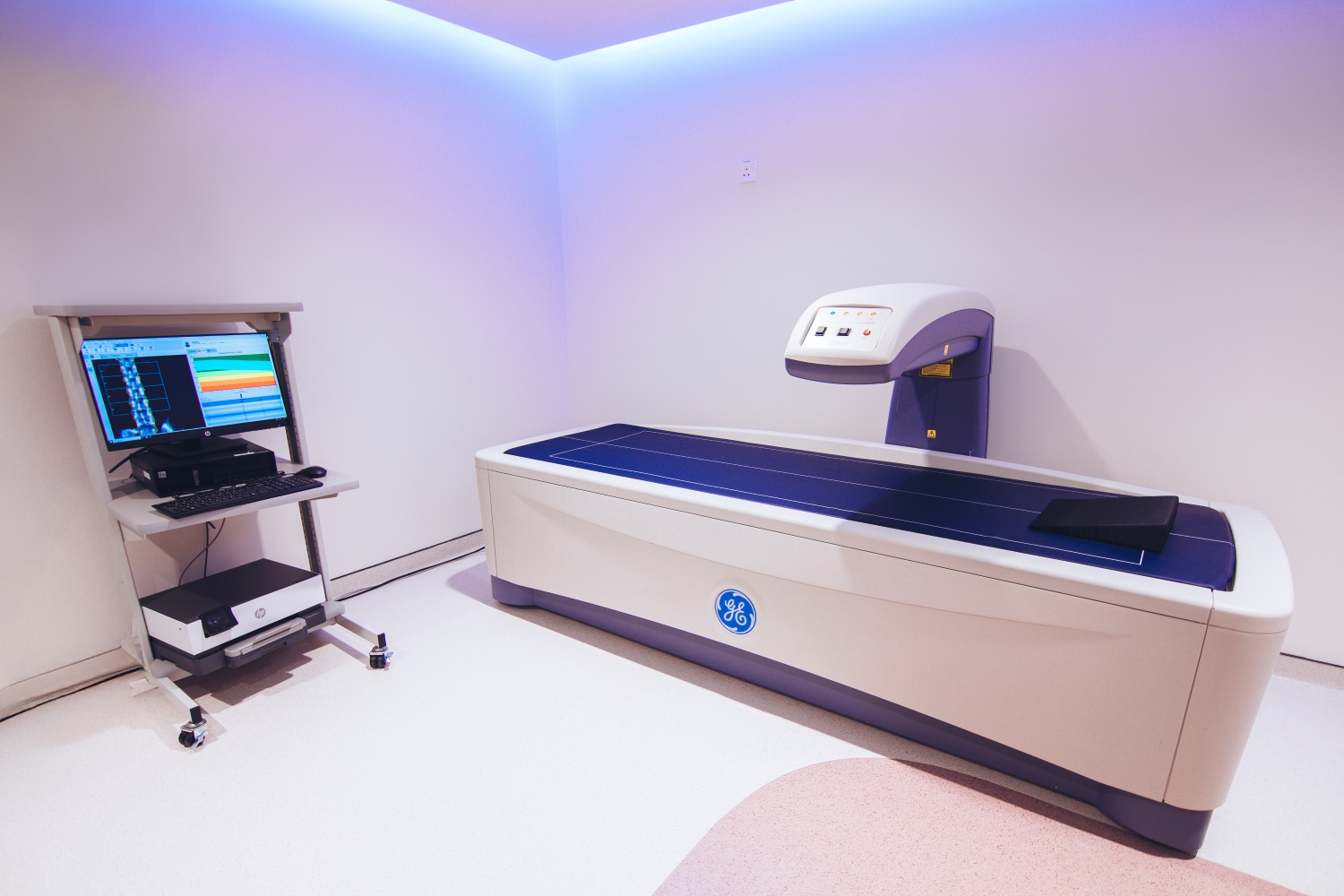
Bone Density Measurement (DEXA)
Bone density measurement (DXA) is often used to diagnose osteoporosis, a common condition that affects women after menopause and can also affect men. Osteoporosis is characterized by a gradual loss of calcium and changes in bone structure, making them thinner, more fragile, and more prone to fractures.
DXA is also effective in monitoring the body’s response to osteoporosis treatment, as well as other conditions that lead to loss of bone mass.
The test can also assess the risk of future fractures, since the likelihood of fractures is influenced by factors such as:
- Age
- Body weight
- Previous history of fractures
- Family history of fractures related to osteoporosis
- Lifestyle (such as smoking or heavy alcohol consumption)
All of these factors are taken into account when determining whether the patient needs treatment.
- Required Preparations
- The patient may be asked to remove some or all clothing during the exam, as well as jewelry, eyeglasses, removable dental appliances, or any metal objects that could affect image quality.
- Women are advised to inform the physician or radiology technologist if there is any possibility of pregnancy.